Where You Live Shapes Maternal Care in Texas
Data tells us an important story about Texas mothers.
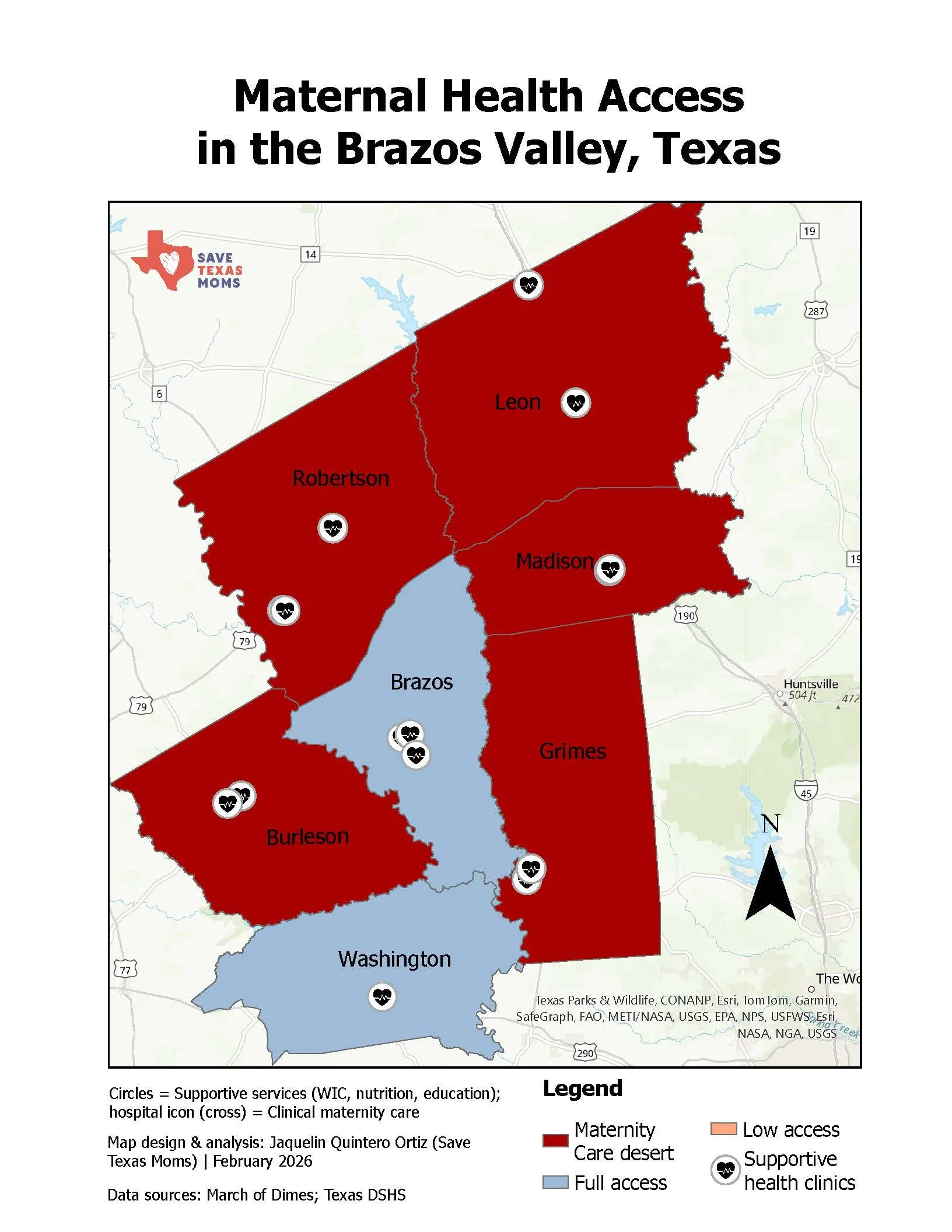
Access to safe, quality maternal healthcare in Texas varies significantly by geography. Travel distance, hospital designation level, provider availability, and county-level infrastructure all influence a mother’s experience of care.
Save Texas Moms conducts geographic analysis to better understand these structural patterns across the state. This data helps identify gaps, inform community-based solutions, and support evidence-driven advocacy.
County Access Status
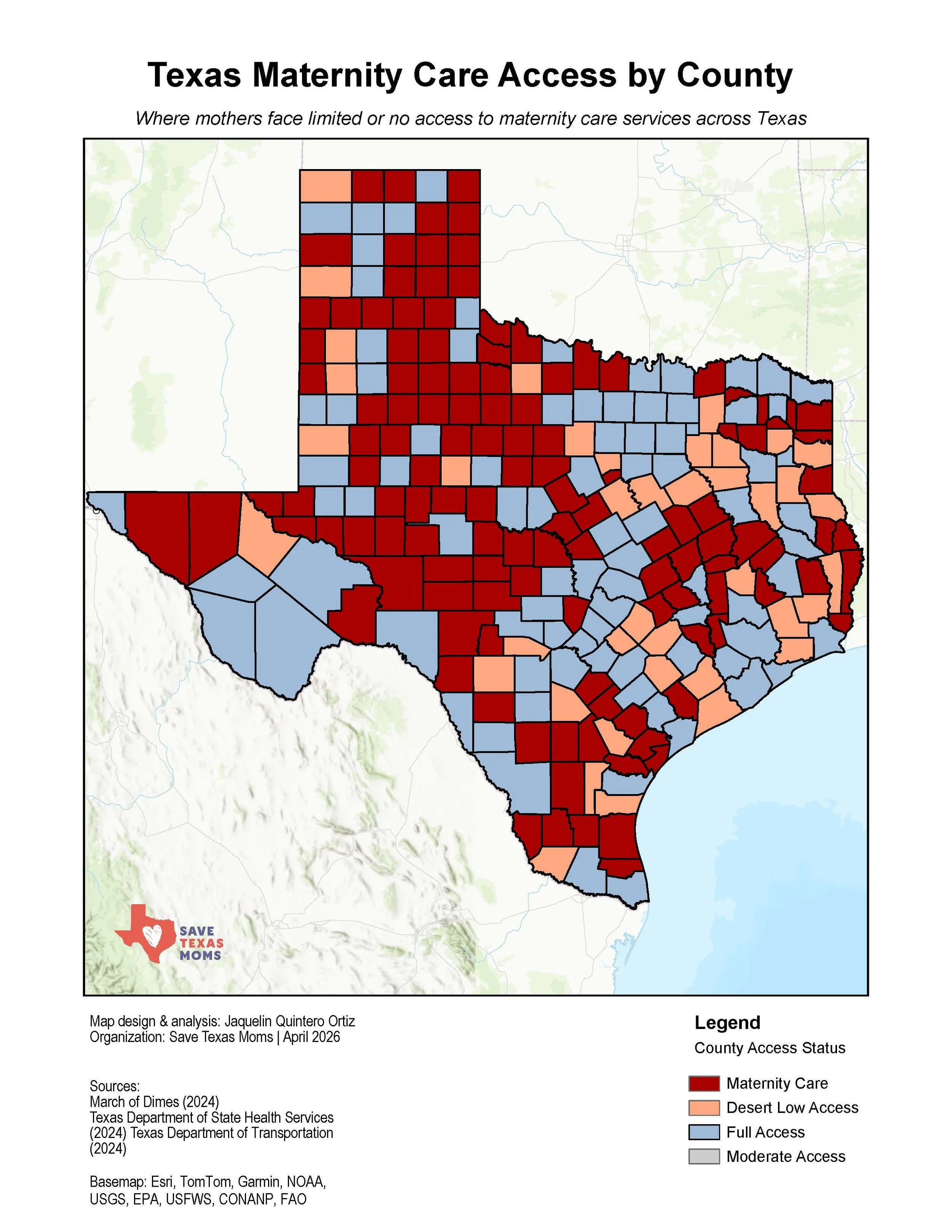
County access classifications are based on the March of Dimes definition of maternity care deserts and levels of access.
Maternity Care Desert: No hospital offering obstetric services and no practicing obstetric providers.
Low Access: Limited hospital or provider availability relative to population need.
Moderate Access: At least one hospital or birth center and at least one obstetric provider, but provider supply may not meet population demand. (Note: Texas has no counties that fall under this definition.)
Full Access: Adequate hospital and provider availability relative to the number of births.
Access status reflects structural availability of services and does not account for transportation barriers, insurance limitations, childcare constraints, broadband gaps, or socioeconomic factors.
Where You Live Matters
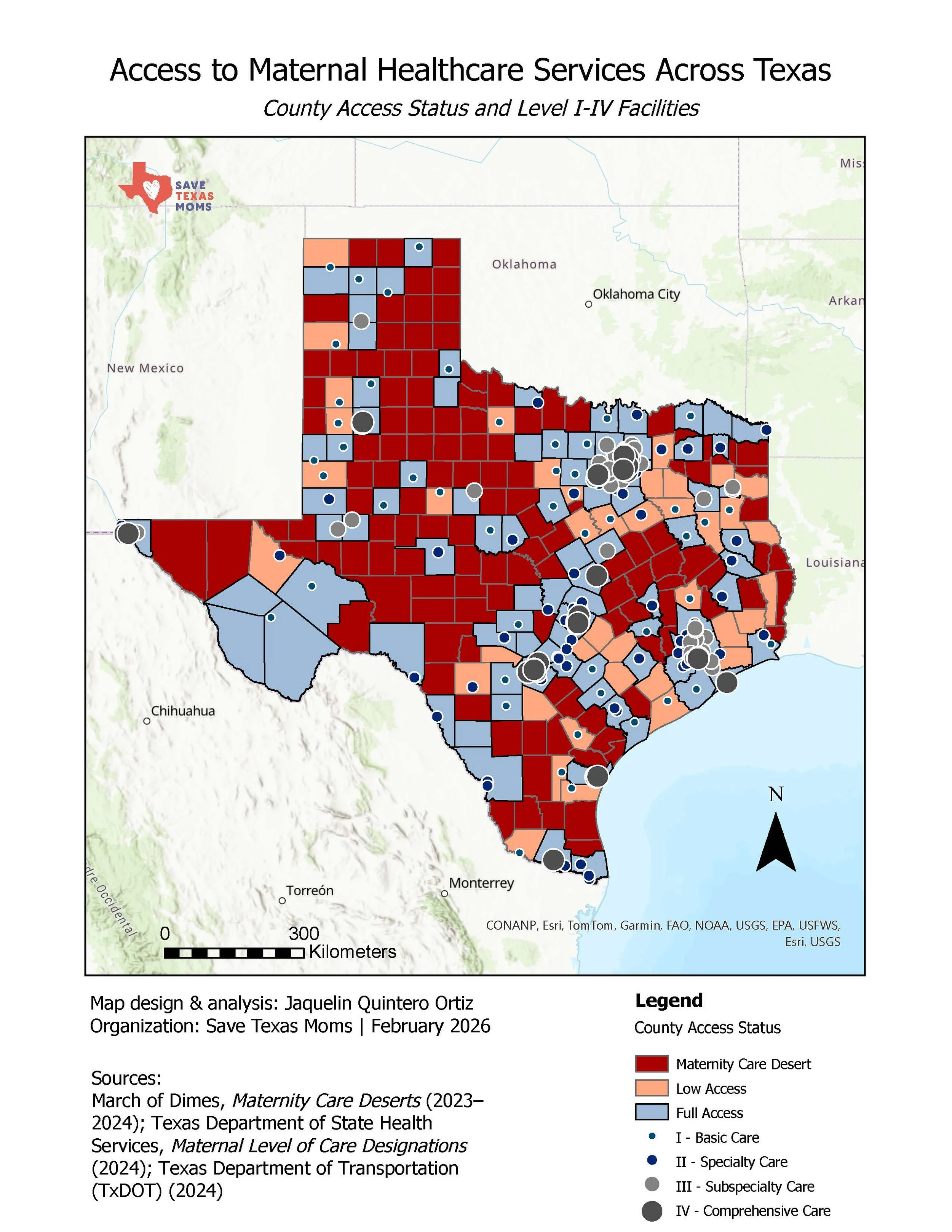
Understanding Maternal Levels of Care
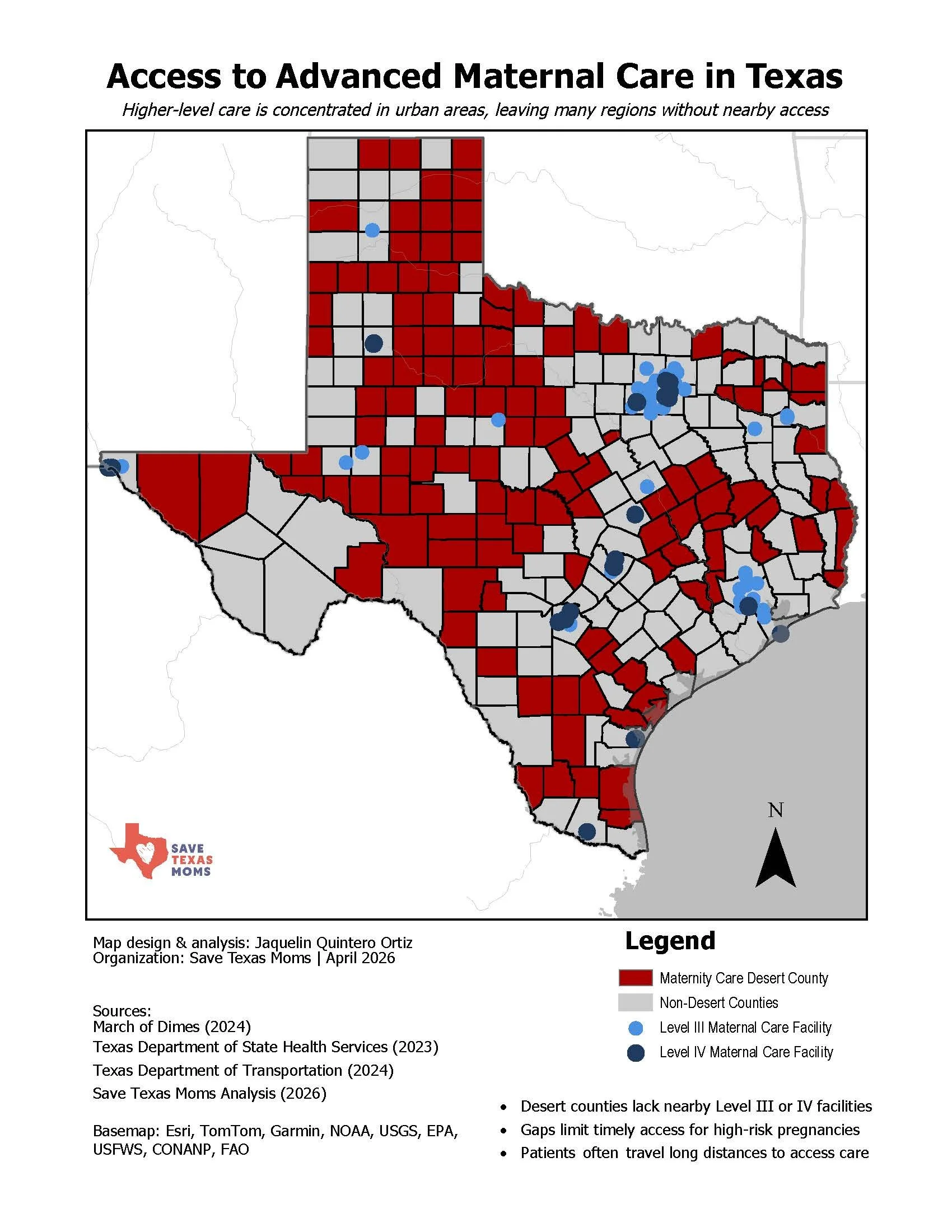
Texas hospitals are designated by the Texas Department of State Health Services according to the level of maternal care they are equipped to provide.
These designations reflect hospital capability — not overall county access.
-
Uncomplicated pregnancies and routine deliveries.
-
Moderate-risk pregnancies requiring specialized services
-
High-risk pregnancies requiring advanced maternal-fetal care
-
Regional centers providing the highest level of maternal and neonatal care
Why This Data Matters
A mother does not experience healthcare by county label alone. She experiences it through:
Travel time to the nearest birthing hospital
The hospital level of care available in her region
Access to prenatal and postpartum providers
Transportation and childcare constraints
Ability to take time off work
By mapping structural access patterns, Save Texas Moms works to:
Identify communities with elevated risk due to infrastructure gaps
Inform placement of Mama Libraries and digital navigation support
Strengthen maternal mental health access initiatives
Support policy discussions grounded in geographic evidence
This data-driven approach ensures that community solutions align with documented structural need.
Ongoing Work
Save Texas Moms continues to refine and expand this geographic analysis through:
County-level maternal access summaries
Travel time modeling
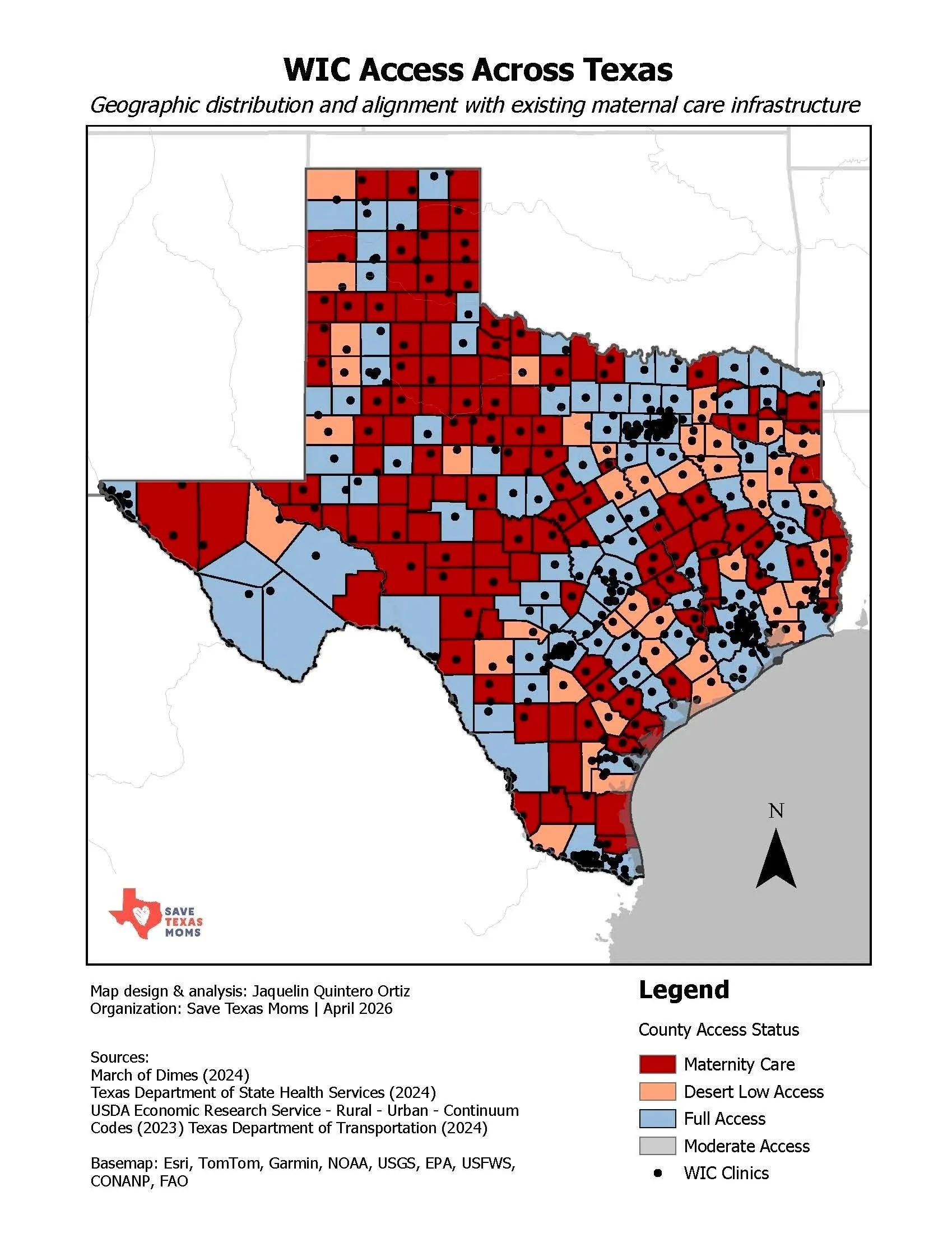
Integration of Women, Infants, and Children (WIC) clinic data
Maternal health workforce overlays
Regional policy brief development
For partnership or research collaboration inquiries, please contact us.