“I Was Still Her Mother”
One Mom’s Dramatic 99-Day NICU Journey with Her Daughter
By Save Texas Moms® | As told by Hillary Whitaker
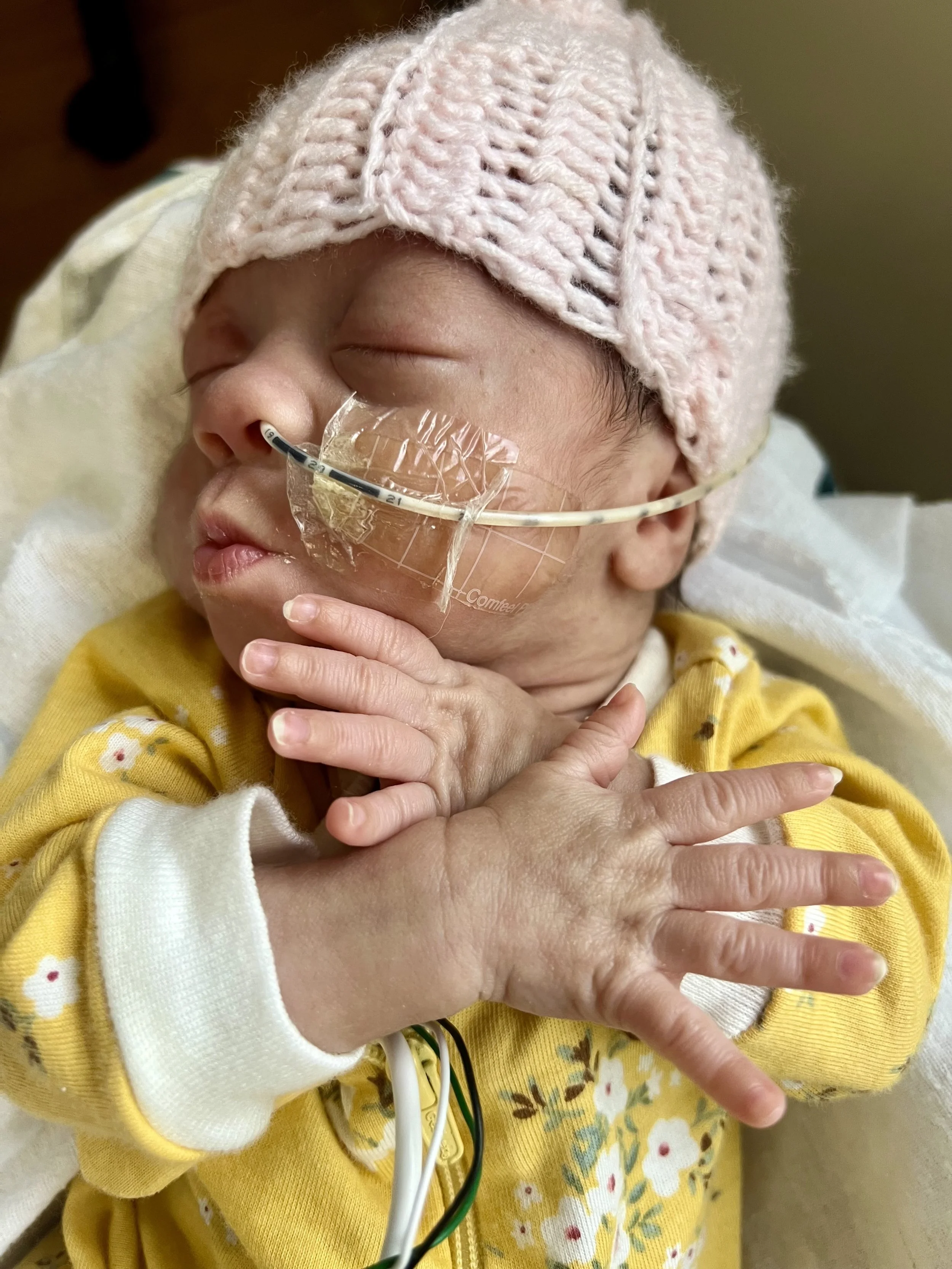
Hope Will Prevail: Born at 28 weeks, Cyrah Hope Whitaker spent the first 99 days of her life in the NICU while Hillary learned how to mother in an unfamiliar world of monitors, medical equipment, and uncertainty.
After an unexpected delivery at just 28 weeks, Hillary Whitaker entered motherhood in a way she never imagined. Her daughter, Cyrah Hope, would spend 99 days in the NICU. Hillary shares the fear, faith, postpartum struggles, and small acts of love that carried their family through—and what she wants another NICU mother to know today.
For most of her pregnancy, Hillary Whitaker had every reason to believe things were going well. Her daughter was growing at a healthy rate. Hillary was doing well, too. She expected to have months more to prepare—to celebrate a baby shower, take maternity photographs, dream about the baby she was carrying, and ease gradually into motherhood.
Then, at 27 weeks pregnant, Hillary began having contractions.
Doctors discovered that her cervix was opening prematurely and that the amniotic sac was beginning to protrude. She was placed on strict bed rest. Two days later, at 28 weeks, everything changed again. Her baby moved into a breech position and began to emerge feet first. Because of the danger to both mother and baby, doctors performed an emergency C-section.
Cyrah Hope was born September 29, 2024, in Tyler, Texas. She was three months early. And almost immediately after becoming a mother, Hillary was separated from her daughter.
“I felt like I had been dropped into an entirely different world without a map. I didn’t know where to start, what to think, or how I was supposed to feel.”
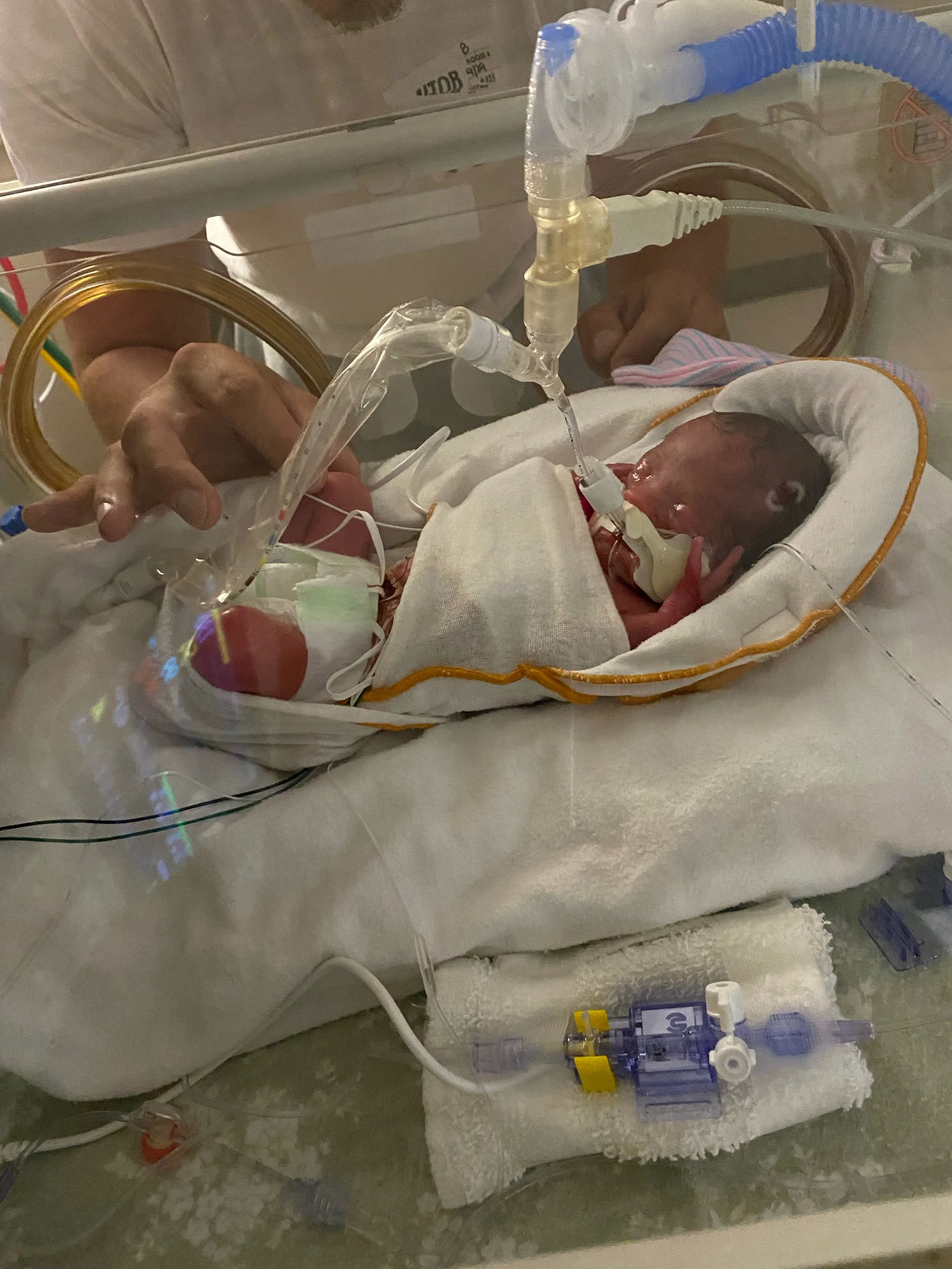
A Precious Package: Cyrah during her NICU stay, where she spent 99 days after being born at just 28 weeks.
Cyrah
Hillary remembers not knowing what to expect. After surgery, hours passed before she was able to see Cyrah.
The medical team encouraged her with stories of premature babies who gained weight, learned to feed, grew stronger, and eventually went home with their families. Hillary desperately wanted to believe everything would be okay. But she had also just become a mother for the first time.
“I felt like I had been dropped into an entirely different world without a map,” she revealed. “I didn’t know where to start, what to think, or how I was supposed to feel.”
Instead of bringing her newborn into her hospital room, holding her whenever she wanted, or beginning the first days of motherhood as she had imagined, Hillary was introduced to breast pumps, NICU equipment, and an entirely unfamiliar medical environment.
A lactation consultant showed her how to pump breast milk for Cyrah. Still, Hillary felt lost. And then came an emotion she almost felt ashamed to acknowledge. She sometimes felt as though Cyrah wasn't really her baby. Not because she didn't love her. For her, it was because they had been separated so suddenly.
“I had planned for three more months with her safely tucked inside my belly,” Hillary recalled.
There was supposed to be more time. Instead, one moment Cyrah was inside her body. The next, her tiny daughter was surrounded by machines while Hillary sat in another hospital room trying to understand what had happened.
“It was a strange kind of grief. She was alive. She was fighting. She was mine. Yet I felt an emptiness I couldn’t explain.”
She couldn't hold her whenever she wanted. She couldn't always be the person who comforted her. Her body was being asked to produce milk for a baby it had not been prepared to deliver.
“It was a strange kind of grief,” Hillary said. “She was alive. She was fighting. She was mine. Yet I felt an emptiness I couldn't explain.”
What do NICU Levels Mean in Texas?
Texas hospitals that provide neonatal care are designated Level I through Level IV based on the type and complexity of care they can provide to newborns. Higher levels are equipped to care for increasingly premature or medically complex babies.
Level I—Well Care: Generally cares for infants born at 35 weeks or later with routine or temporary problems.
Level II—Special Care: Generally cares for infants born at 32 weeks or later and weighing at least 1,500 grams (3 lb 5 oz) whose problems should resolve relatively quickly.
Level III—Neonatal Intensive Care: Provides comprehensive intensive care for critically ill or premature infants of all gestational ages, including sustained life support and access to pediatric specialists.
Level IV—Advanced Neonatal Intensive Care: The highest level, providing Level III care plus comprehensive pediatric medical and surgical subspecialty services for the most complex conditions.
Source: Texas Department of State Health Services, Neonatal System Development
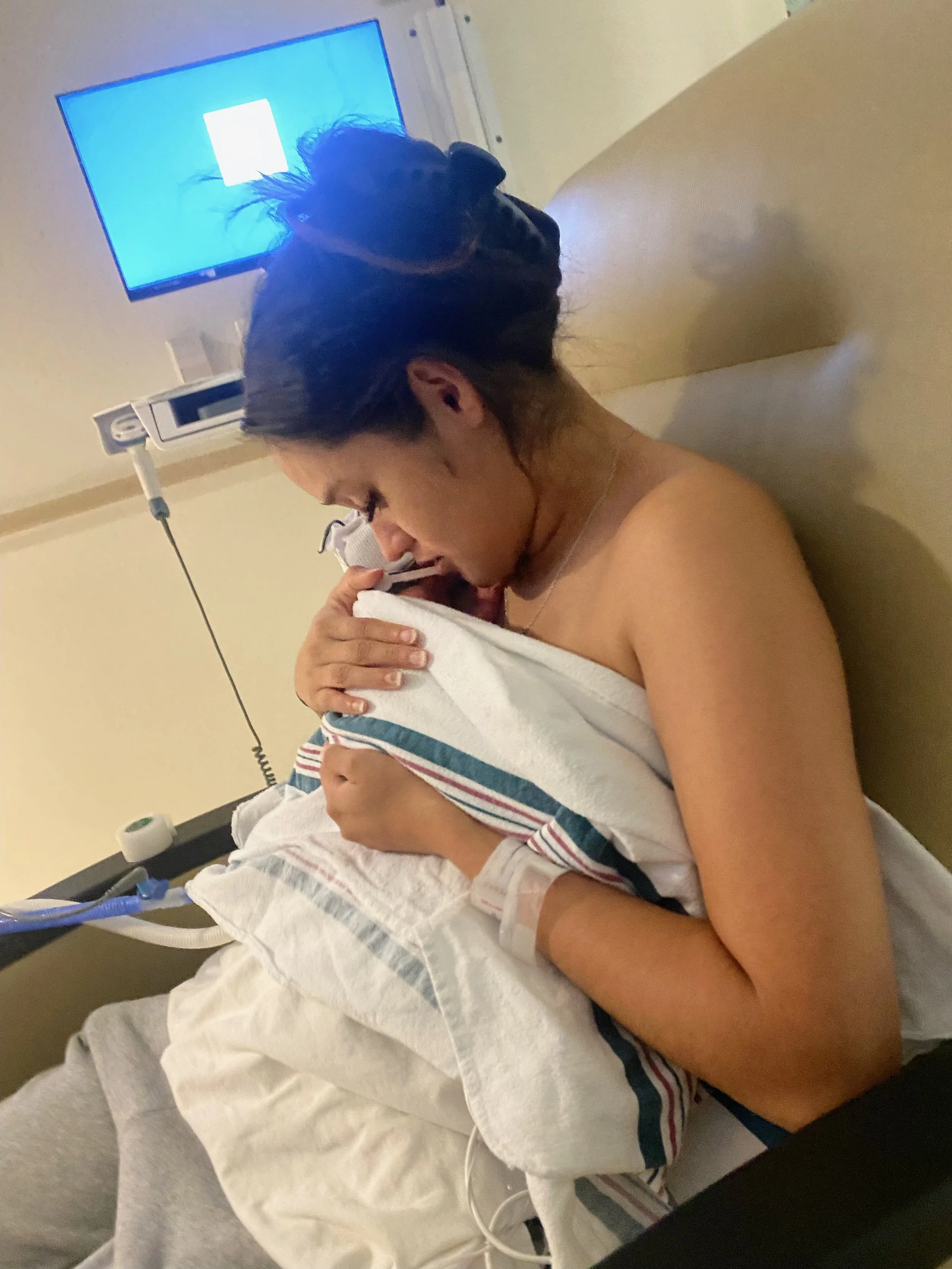
A Mother’s Love: Hillary Whitaker holds Cyrah close during the early days of her daughter’s hospitalization. Their first months together unfolded inside the NICU.
Waiting for “When”
For Hillary, one of the hardest parts of the NICU was uncertainty.
Her faith became a source of strength throughout Cyrah's hospitalization. Hillary believed deeply that her daughter would eventually come home. The question that consumed her wasn't if. It was when.
Some weeks Cyrah struggled with breathing. Other weeks, the concern was her heart rate or whether she could consume enough milk. Until she could manage those essential functions independently, she wasn't ready to leave.

Holidays in the Hospital: Cyrah celebrates her first Halloween in the NICU. Holidays came and went as Hillary and her family waited for the day she could come home.
Thanksgiving passed. Then Christmas. Then New Year's. Cyrah was still in the hospital.
Outside the NICU, life continued. Hillary struggled to participate in it. She felt guilty experiencing joy while her daughter remained hospitalized. She also carried another kind of guilt—the belief that somehow her own body had failed her baby.
While Cyrah fought to grow stronger, Hillary pumped breast milk around the clock. Every three hours, day and night. Her life became a cycle of pumping, hospital visits, brief stretches of sleep, and then starting again.
“Sometimes I would sit alone in the darkness of my home, exhausted and aching, and cry because she wasn't there with me,” she said.
Hillary’s family worried as they watched the exhaustion and uncertainty take their toll. They called, prayed, checked on her, sat with her, and helped her remember that she was not carrying the experience alone.
At times, Hillary felt more like a machine than a mother. But pumping also became one way she could actively care for her daughter. When so much else was beyond her control, she could do this. She could show up. She could provide milk. She could give Cyrah something only she could give.
“Sometimes I would sit alone in the darkness of my home, exhausted and aching, and cry because she wasn’t there with me.”

Pregnancy, birth, a NICU hospitalization, and the postpartum period can bring complicated emotions. Mothers and their families do not have to navigate those experiences alone.
National Maternal Mental Health Hotline
• 1-833-TLC-MAMA (1-833-852-6262)
• Text/Call/Chat
• Free, 24/7, Confidential
• English or Spanish
• Staffed by Trained Counselors
When the Postpartum Period and the NICU Collide
The attention surrounding a premature birth understandably focuses heavily on the baby. But the postpartum period can be a complex time for mothers, too.
Hillary was recovering physically from an emergency C-section while also trying to process the emotional trauma of an unexpected premature delivery and prolonged separation from her newborn. At first, she assumed everything she felt was simply an understandable reaction to what had happened. But the sadness didn't lift.
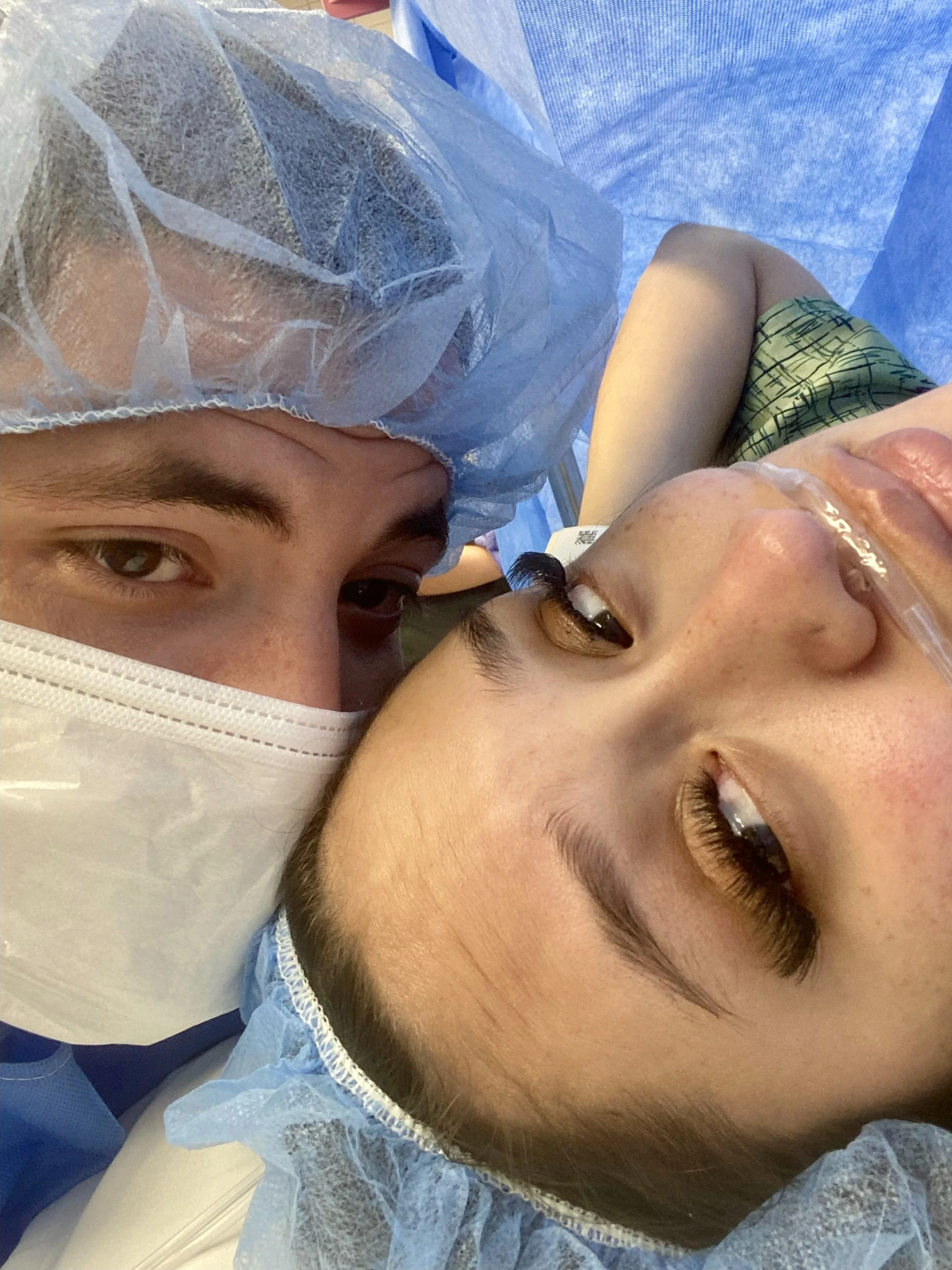
Complex Emotions: In the days after Cyrah’s premature birth, Hillary was recovering from an emergency C-section, separated from her newborn, and struggling with emotions she would later recognize as postpartum depression.
“My daughter is okay. I'm okay,” she tried to reassure herself. “So why am I crying all the time?”
Her exhaustion was physical, mental, and emotional. Hillary felt isolated even when surrounded by people who loved her because, as she described it, this was her experience. Her baby. Her heartbreak. She watched other people's lives continue while hers revolved around the NICU.
“The darkest thoughts would replay in my mind constantly,” she revealed. “Friends and family could go home, sleep in their own beds, and continue with their routines. Meanwhile, my baby had been taken from my arms before I ever had the chance to truly hold her. Those thoughts consumed me.”
She even found herself becoming resentful toward her husband, Triston. While he continued working full-time as the family's provider, Hillary sometimes felt he could not possibly understand what she was experiencing. Looking back, she sees that period differently.
She now recognizes that Triston was carrying his own burden—trying to support his wife, provide for their family, stay strong, and process his fears for their daughter at the same time.
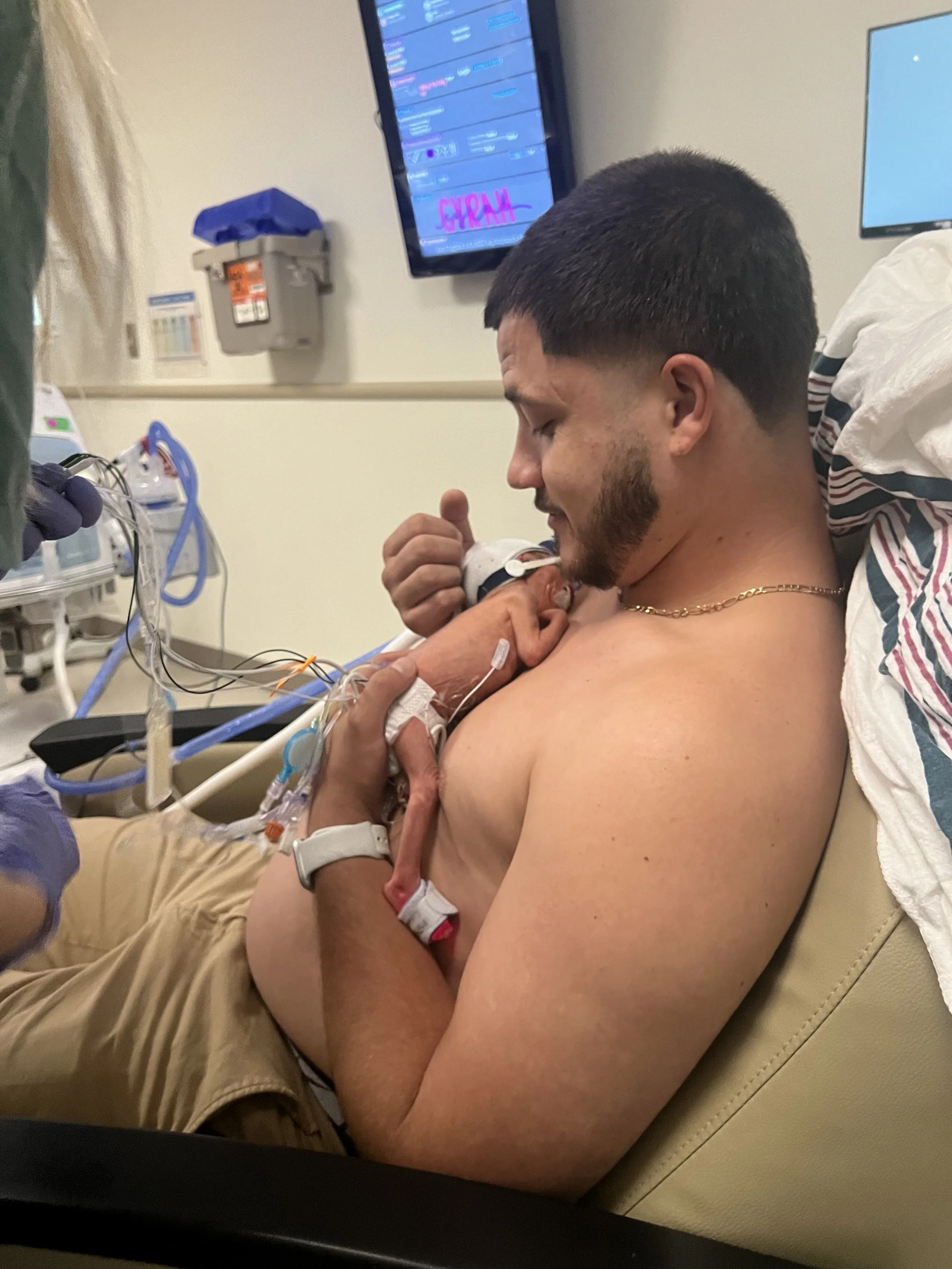
NICU Bonding: Cyrah rests against her father, Triston, during her NICU stay, one of the moments of closeness that helped their family through the long hospitalization.
Hillary also came to realize that she was experiencing postpartum depression and anxiety. And surprisingly, one of the things that helped keep her going was the same relentless pumping schedule that had once made her feel like a machine.
Providing milk gave her a reason to care for herself. She had to eat. She had to drink water. She had to get up again. One pump at a time. One feeding at a time. One hospital visit at a time.
“When everything else felt out of control, that one act of caring for my daughter gave me a reason to keep moving forward,” Hillary said. “It became a thread of hope that God used to carry me through one of the darkest seasons of my life.”
Hillary also acknowledged that the NICU nurses helped her gradually grow into motherhood. They taught her how to feed Cyrah, change her diapers, recognize her cues, and establish the demanding three-hour rhythm of newborn care.
After 99 Days—Home
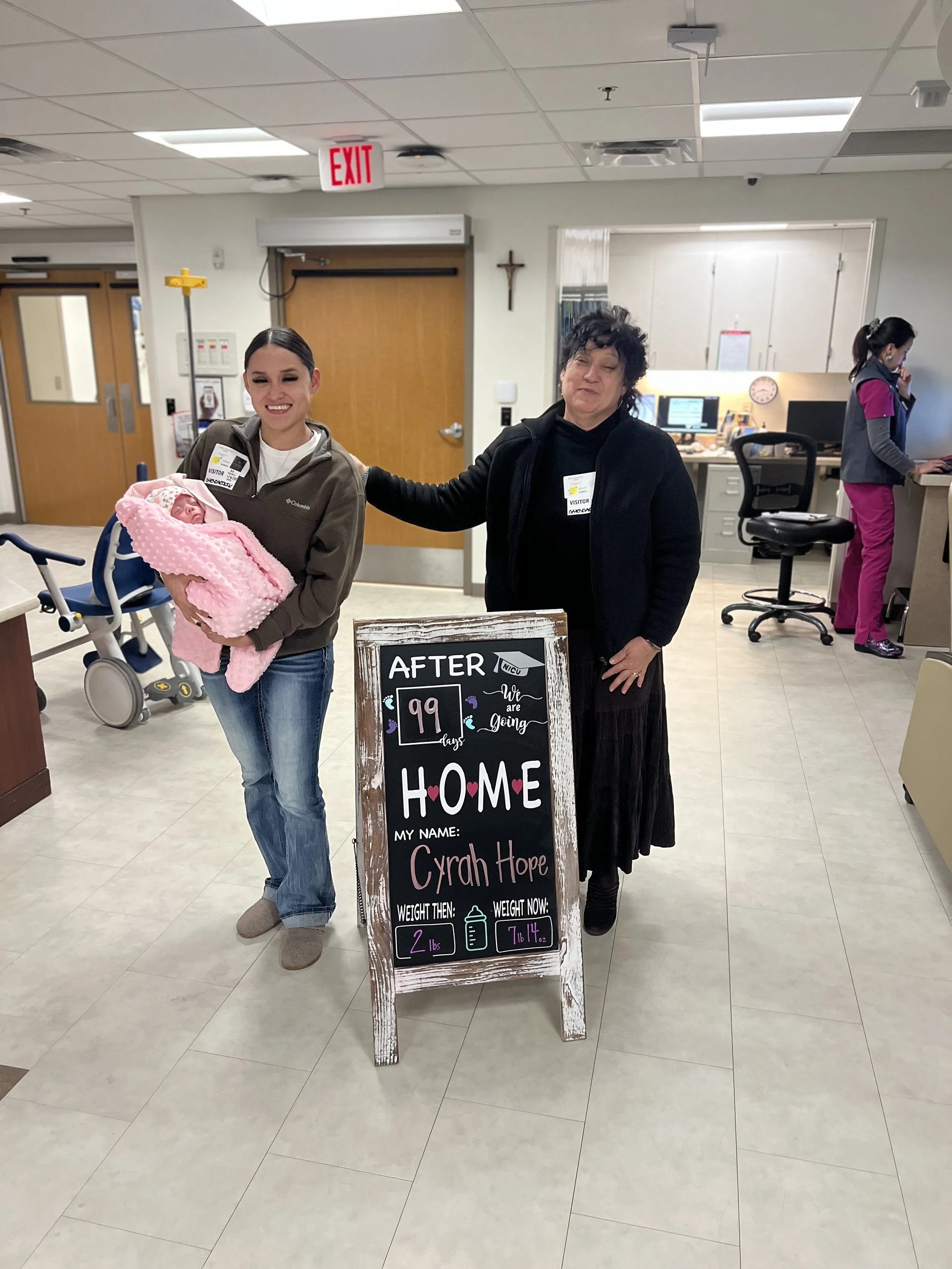
Finally Going Home: After 99 days in the NICU, Hillary carries Cyrah out of the hospital and finally takes her daughter home.
At last, after 99 days, the moment Hillary and her husband had waited for finally arrived. Cyrah was going home. On January 6, 2025, Hillary and Triston finally carried their daughter out of the hospital and brought her home.
Hillary remembers feeling overwhelmingly proud of her daughter.
“I couldn't help but feel that she had been dealt an unfair start to life, but she faced it all like a warrior. Watching her fight so hard filled me with a sense of pride that I had never experienced before,” she recalled.
Walking out of the hospital felt like a victory. It was also frightening. For three months, doctors, nurses, and monitors had surrounded Cyrah. If something happened, help was immediately available. But now, Hillary and Triston were taking their baby home on their own.
“I knew how to change diapers, prepare bottles, and follow a feeding schedule,” Hillary said, “but there was still a voice in the back of my mind asking the same question over and over: What if I don't know what I'm doing?”
Overcome with an immense sense of responsibility, Hillary wishes, looking back, that someone had given her one important message at the very beginning.
“I wish someone had told me that I was still a mom. That motherhood is not measured by how long you carry your baby, how you deliver them, or whether you get those first precious moments exactly as you imagined.
“Needing doctors, machines, and a NICU team did not make me any less of a mother,” she understood. “I still counted. I still loved her. I still showed up for her every day. I was still her mother.”
“Motherhood is not measured by how long you carry your baby, how you deliver them, or whether you get those first precious moments exactly as you imagined.”
It is also what she wants another mother sitting beside a NICU incubator today to know.
“Never underestimate the power of your presence,” Hillary said. “You are the best thing for your baby.”

Hillary Whitaker, shown here with her husband, Triston, and daughter, Cyrah, shared her story and photographs with Save Texas Moms® in the hope that her experience might help other mothers and families navigating premature birth, NICU hospitalization, and the postpartum period. The Whitaker family lives in Fairfield, Texas.

Today, daughter Cyrah is nearly two years old and, according to Hillary, is spunky, social, loving, and fearless.